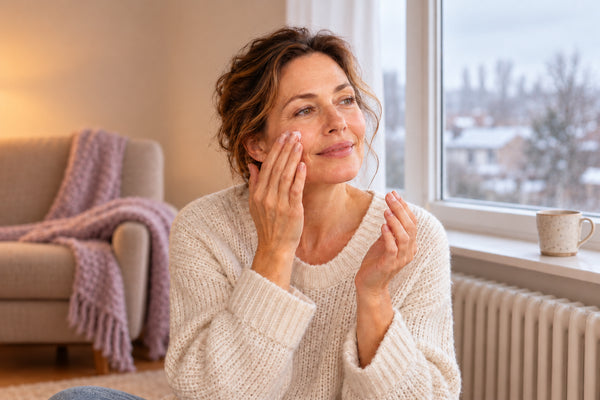
Why does my skin feel so dry and tight in autumn? How to keep your skin hydrated as the temperature drops
Tightness, flaking, rough patches and that uncomfortable feeling that your skin needs another layer of moisturiser and it’s not even lunchtime? You're not imagining it. As summer gives way to autumn, our skin faces a whole new set of challenges. Here's why your complexion might be feeling parched and how to keep it comfortable, hydrated and healthy throughout the colder months.
There is something lovely about the arrival of autumn. Cosy jumpers, warmer coats, evenings in and the first signs of Christmas appearing in the shops. But while we're busy getting ourselves ready for the colder weather, our skin might be having a rather different experience.
Perhaps your foundation isn't sitting as smoothly as it did a few weeks ago. Your cheeks feel tight after washing your face, there's a little flaking around your nose or chin, or your usual moisturiser suddenly doesn't seem to be doing the job.
Sound familiar?
The transition from summer into autumn can be surprisingly demanding on our skin. It's not simply the drop in outdoor temperatures that causes problems. It's the constant movement between different environments, each with its own temperature and humidity levels.
Think about a typical day. You leave your centrally heated home, step into the cold morning air, drive to work with the car heater blowing, spend several hours in an air-conditioned office and then repeat the whole process in reverse.
Your skin is having to adapt to all these changes, often without much help from your skincare routine, which has behaved perfectly well all summer, yet now is letting the side down!
So, what's happening and, more importantly, what can you do about it?
Why does skin become drier when the weather gets colder?
Yes, it’s the skin barrier! I’ve written loads about our skin’s a natural protective barrier, known as the skin barrier, which plays a vital role in keeping moisture where it belongs and protecting us from external irritants.
When the skin barrier is healthy, it helps prevent excessive water loss and keeps skin feeling comfortable, smooth and supple. However, colder weather, lower humidity and indoor heating can all compromise this delicate balance.
As the air becomes drier, moisture can escape more readily from the skin through a process called transepidermal water loss. The result can be skin that feels tight, rough, flaky or generally uncomfortable.
And it's not just the weather outside we need to consider.
The everyday temperature changes affecting your skin
It's easy to blame the cold weather, but some of the biggest challenges for our skin actually happen indoors.
1. Central heating at home
As the temperature drops, the heating goes on. Lovely for us, but not necessarily for our skin.
Central heating reduces the humidity in indoor air, creating a dry environment that encourages moisture to escape from the skin. Sitting close to a radiator or having the heating running overnight can make things worse.
2. Air conditioning at work
We tend to associate air conditioning with summer, but many offices continue to use climate-control systems throughout the year.
Air conditioning can reduce indoor humidity, leaving skin exposed to dry air for hours at a time. If you already have a compromised skin barrier, you may notice increasing tightness and dehydration as the working day progresses.
3. The warm car and cold outdoors combination
One minute you're sitting in a warm car with the heater blowing towards your face, the next you're stepping out into cold, potentially windy air.
These rapid changes in temperature and humidity can be uncomfortable for skin that's already struggling to retain moisture. Direct blasts of hot air can also contribute to dryness.
4. Hot showers and baths
When it's cold outside, a long, hot shower can feel irresistible. Unfortunately, very hot water can strip away some of the natural oils that help protect your skin.
If you're already experiencing seasonal dryness, this can leave your skin feeling even tighter after washing.
5. The lingering effects of summer
Summer can take its toll, too. Sun exposure, swimming, air conditioning and increased use of exfoliating products can all contribute to a weakened skin barrier.
By the time autumn arrives, your skin may already be a little depleted, making it more vulnerable to the environmental changes ahead.
Dry skin or dehydrated skin: what's the difference?
Although we often use the terms interchangeably, dry and dehydrated skin aren't quite the same thing.
Dry skin is a skin type. It generally produces less natural oil (sebum), meaning it can struggle to maintain the lipid protection needed to keep moisture in. It may feel rough, flaky or tight throughout the year.
Dehydrated skin is a skin condition. It means your skin is lacking water. Any skin type, including oily and combination skin, can become dehydrated.
Dehydrated skin can look dull, feel tight and make fine lines appear more noticeable. You might also find that your complexion looks less plump and that makeup settles into fine lines more readily.
The two can occur together, of course. And when they do, your skin may need both water-attracting ingredients and nourishing lipids to restore its comfort and balance.
How to keep your skin hydrated and healthy throughout autumn and winter
The good news is that you don't need to completely overhaul your skincare routine. A few thoughtful adjustments can make a considerable difference.
1. Switch to a more nourishing moisturiser
If you've been using a lightweight summer lotion, autumn is a good time to consider something a little richer. Consider SkinGoal’s Skin Drench.
Tara seed extract helps boost hydration and improve skin texture, panthenol soothes and supports the skin barrier, while tocopherol (vitamin E) provides antioxidant protection against free radical damage. And as well as all this, it includes Tripeptide-1 and Tetrapeptide-7, a clinically proven peptide duo that supports collagen, smooths lines and firms skin. Win win!
2. Look for ingredients that attract and retain moisture
Humectants are ingredients that attract water and help increase hydration within the outer layers of the skin.
Hyaluronic acid, of course is a well-known humectant that attracts and holds water, helping skin appear plumper and feel more comfortable. After cleansing, layer on SkinGoal’s Power HA. Not only does it contain hyaluronic acid, but glycerin too, a highly effective, well-established moisturising ingredient that helps draw water into the outer layers of the skin.
Apply to slightly damp skin, then follow with Cream Drench to lock that hydration in.
3. Don't forget your skin barrier
Hydration is only part of the picture. Your skin also needs a healthy barrier to hold on to that moisture.
If your skin is feeling particularly sensitive, it might be worth temporarily reducing strong exfoliating acids, retinoids or other potentially irritating active ingredients.
There's no need to abandon ingredients that work well for you, but autumn isn't really the time to push your skin harder.
4. Be gentler when cleansing
Your summer cleansing routine might need a little adjustment.
Avoid harsh cleansers that leave your skin feeling squeaky clean or tight. Instead, choose a gentle, hydrating cleanser that removes makeup, sunscreen and everyday impurities without unnecessarily stripping the skin. SkinGoal’s Prep Cleanse is a gentle cleanser that respects the skin barrier while clearing away makeup, impurities and daily pollutants. Sweep a cotton pad soaked in Botanical Balance Toner across skin after your cleanse; ginseng helps revitalise tired, lacklustre skin, hyaluronic acid replenishes moisture and smooths, green tea provides antioxidant protection, while aloe vera and liquorice root help soothe irritation and reduce the appearance of redness.
Finally, try to avoid washing your face with very hot water. Lukewarm is much kinder to your skin barrier.
5. Apply moisturiser at the right time
One of the simplest ways to improve skin hydration is to apply your moisturiser while your skin is still slightly damp after cleansing.
This helps trap existing moisture in the skin and reduces water loss.
Don't forget your neck and décolletage, either. These areas are often overlooked but can be just as susceptible to seasonal dryness.
6. Keep your skin protected outdoors
Cold winds and low humidity can leave exposed skin feeling uncomfortable, particularly around the cheeks and lips.
A nourishing moisturiser can help provide additional protection, while a scarf can shield your face when the weather is particularly cold.
And don't put away your SPF just because summer is over. UV exposure doesn't disappear in autumn, so broad-spectrum SPF 30 or above should remain part of your morning routine.
7. Think about your indoor environment
Your skincare routine can only do so much if you're spending hours in very dry indoor air.
Try not to sit directly in front of radiators or car heaters, keep your home at a comfortable temperature rather than overheating it and consider using a humidifier in your bedroom if the air feels particularly dry. Small changes to your environment can help support the work your skincare products are doing.
Give your skin a little extra attention this autumn
The key to healthy-looking skin throughout the colder months is to think beyond simply adding more moisturiser. You need to attract and retain water, support the skin barrier and reduce the environmental factors that encourage moisture loss.
A combination of humectants (water attractive skincare ingredients such as glycerin and hyaluronic acid), nourishing moisturisers and barrier-supporting ingredients can help restore comfort, improve skin texture and maintain that healthy, hydrated appearance.
And remember, if your skin is persistently flaky, inflamed, itchy or painful, it may be more than seasonal dryness. Conditions such as eczema and dermatitis can worsen in colder weather, so it's worth seeking advice from a healthcare professional.
Your skin works hard to protect you all year round. As the seasons change, it's worth returning the favour.
Love, Penny xxx
As temperatures drop, skin can become dry, dehydrated and more sensitive because cold outdoor air, central heating, air conditioning and hot showers increase moisture loss and can compromise the skin barrier. Maintaining healthy autumn skin involves using humectants such as hyaluronic acid and glycerin to attract moisture, alongside ceramides and nourishing moisturisers to support the skin barrier and reduce water loss. Gentle cleansing, warm (not too hot) showers, daily SPF and adapting your skincare routine to seasonal changes can help maintain comfortable, hydrated and resilient skin.